Sweeteners
Sweeteners are generally used in foods to reduce the amount of sugar itself, or to moderate sweetness, and fall into two broad groups. Intense sweeteners are many times sweeter than sugar and this group includes the well-known sweeteners saccharin, aspartame and sucralose which are roughly 300x sweeter than sugar and can be used in very small amounts. Whilst they replace the sweetness they do not replace the bulk if sugar is used in smaller proportions or removed so the other main group is known as bulk sweeteners and these are polyols such as sorbitol, mannitol and xylitol. These are about 80% as sweet as sugar so are often used in combinations with sugar and intense sweeteners. Some sweeteners have very intense initial sweetness and some sweeteners have a sweetness which develops and lingers, but most sweeteners have a bitter after-taste. Intense sweeteners were historically called ‘artificial sweeteners’ but the term ‘non-sugar sweetener’ is now used.
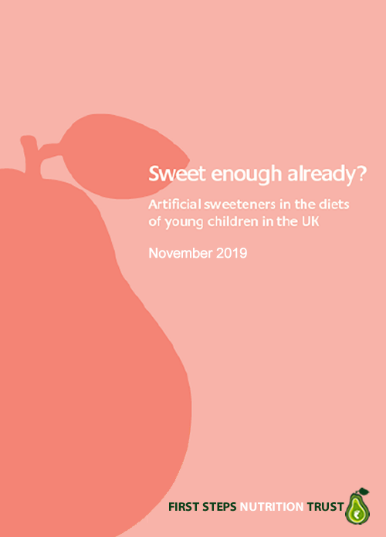
There has been considerable controversy about the safety of some non-sugar sweeteners (NSS) in foods and a summary of some of the issues related to young children (and pregnant women) can be found in this report.
Whilst many campaigners have been concerned about the health risks associated with the use of NSS, until recently their use for the reduction of sugar intake to tackle obesity in particular has not been questioned, leading to Governments encouraging their use in foods such as soft drinks with greater taxes for products that contain sugar. The UK Soft Drinks Industry Levy (SDIL) was introduced in 2016 and led to a mass reformulation of drinks to reduce sugar and increase NSS content. Soft Drinks Industry Levy – GOV.UK. This levy has been seen as a success in terms of sugar intake reduction, and consultation is currently underway that the scope of products included should be expanded to include milk-based drinks. This consultation closes in July 2025 and you can see our response to this here (link to response). Recent reports have not however questioned the safety of NSS use
Whilst the use of non-sugar sweeteners (NSS) in food and drink has long been encouraged in public health to reduce energy and sugar intake, a report from The World Health Organisation in 2023 recommends against the use of NSS to control body weight or reduce the risk of noncommunicable diseases such as heart disease, high blood pressure, diabetes or cancer 9789240083479-eng.pdf. This recommendation was for all population groups including pregnant women and children.
In 2025 the UK’s Scientific Advisory Committee on Nutrition (SACN) response to the WHO report advised that the intake of NSS be minimised.
For younger children, SACN recommends:
- not giving them drinks sweetened with sugar or NSS
- giving them unsweetened food (not sweetened with either sugar or NSS)
For older children and adults, SACN recommends:
- swapping sugars for NSS may help reduce sugar intake from foods and drinks (and so reduce energy intake), at least in the short term – the long-term goal is to limit both sugar and NSS intake
SACN statement on the WHO guideline on non-sugar sweeteners: summary – GOV.UK
These statements focused on the lack of evidence that NSS were ‘beneficial’ in preventing obesity and other disease rather than concerns about the risks associated with their use, but there is strong and consistent evidence that the safety of a number of sweeteners – notably but not limited to aspartame, acesulfame-k, saccharin and sucralose – should be carefully reviewed. Recent evidence has also suggested that the polyol erythritol may also be linked to cardiovascular disease. Information about specific NSS can be accessed following the bold and underlined names in the list below.
We believe that the evidence for limiting the use of NSS across the population is much stronger than is acknowledged by both Governmental and non-Governmental public health groups in the U, and we have particular concerns about:
- The links between NSS and disruption of the gut microbiota
- Links between NSS use and development of type 2 diabetes
- The damage that some NSS can cause to DNA which may lead to cancer
- The risks of consumption during pregnancy on the infant microbiota as well as potential links to pre-term birth and development of diabetes
For our summary of evidence on artificial sweeteners in the diet and potential risks to health see here (x-ref)
The one potential benefit of the use of NSS in children’s diets is the reduction of dental caries, however adding NSS to the diet alone will not be preventative as other protective measures need to be taken, and we believe families are often confused by ‘no’ and ‘low’ sugar products and fail to realise that acidic drinks both with and without sugar damage the tooth enamel and can lead to poor oral health. For our summary of the evidence relating to the use of NSS and oral health please see here (link to statement).
To find out information about the individual NSS currently permitted in foods and drinks in the EU see the list below, further information about the additive and any concerns about its safe use in food can be found where names are both in bold and underlined.
Polyols
Sorbitol (E420)
Sorbitol (E420) also known as crystalline sorbitol and sorbitol syrup. This polyol is widely available in nature as a constituent of fruits and berries. It was originally identified in the berries of the Mountain Ash (Sorbus acuparia) but it is made commercially from the hydrogenation of dextrose syrup, and is available as a crystalline product and aqueous solution. Sorbitol is used to replace sucrose and glucose syrup to provide bulk, texture and sweetness. It is typically used in sugar-free sweets such as chewing gums and soft and hard candies. Sorbitol syrup is also used as a humectant and as a sequestering and emulsifying agent in confectionery and bakery products as well as in mayonnaise, creams and sauces. The advantage if sorbitol is that it doesn’t promote tooth decay, has a reduced calorie content compared to sugar (2.4kcal/g compared to 3.75kcal/g in sugar). It extends the self-life of foods, doesn’t provide browning when food is baked and can be used with oother polyols and intense sweeteners to balance its reduced sweetening power (about 60% that of sucrose).
In the EU it is permitted quantum satis in table-top sweeteners and a range of energy reduced or no added sugar products such as confectioner, dietary products and supplements, and for non-sweetening purposes in fresh fish and crustacea. In the EU if a product contains more than 10% sorbitol it must be labelled that ‘excessive consumption may produce laxative effects’. Regulation 1333/2008.
Mannitol (E421)
Mannitol (E421) is widely present in nature in plants, fruits and algae, but is produced commercially by hydrogenation of fructose or mannose. Mannitol has 50-60% of the sweetness of sucrose and is used in combination with other polyols or intense sweeteners. As well as acting as a sweetener is used to control water activity in chewing gum and hard boiled sweets to reduce stickiness. It doesn’t contribute to browning of food and extends food shelf-life. Like the other polyols mannitol does not contribute to tooth decay and is not metabolised in the same way as other sugars. It has a calorific value of 1.6kcal/g compared to a value of 3.75kcal/g for sucrose. It is allowed quantum satis in table top sweeteners, energy reduced or no added sugar products such as confectionery, dietary products and supplements. It is also permitted for non sweetening purposes in fish and crustacea. In the EU if a product contains more than 10% mannitol it must be labelled that ‘excessive consumption may produce laxative effects’. Regulation 1333/2008.
Isomalt (E953)
Isomalt (E953) is a sugar replacing polyol that is produced as a white crystalline product by enzymic conversion of sucrose into isomaltose and then hydrogenation into isomalt. As a sugar replacer it has 50-60% the sweetness of sugar and is used in confectionery with a reduced sugar or calorie claim. It provides sweetness, bulk and texture while replacing sugar. It is often used with intense sweeteners to vary sweet flavours. Unlike some other polyols it does not give a ‘cooling’ effect in the mouth and it dissolves slowly so sweets last longer. Isomalt does not contribute to dental caries, doesn’t lead to browning of food and doesn’t retain moisture. This makes it useful for controlling moisture during shelf-life. It has an energy content of 2.4kcal/g compared to 3.75kcal/g for sucrose. In the EU it is allowed quantum satis in specific products such as tabletop sweeteners, energy reduced and no added sugar products and is permitted for non-sweetening purposes in fish and crustacea. In the EU if a product contains more than 10% isomalt it must be labelled that ‘excessive consumption may produce laxative effects’. Regulation 1333/2008.
Polyglycitol syrups (E964)
Polyglycitol syrups (E964) are clear, colourless and odourless viscous liquids which are a mixture of maltitol, sorbitol and some longer chain polyols in water. A range of syrups are available which differ in the proportions of the main materials. Polyglycitol syrups are less sweet than other polyols, and have been 20-50% the sweetness of sugar. They provide more bulk, opacity, binding and stability in energy reduced or sugar-free products, where they are used in boiled sweets, ice cream, jam, confectionery and chewing gum. In chewing gum they act as a plasticiser keeping the gum soft and pliable and they do not cause browning on foods when cooked. Polyglycitol syrups have an energy content of 3kcal/g compared to 3.75kcal/g in sucrose. In the EU polyglycitol syrup is permitted in a range of energy reduced or no added sugar foods and these have individual maxima. In the EU if a product contains more than 10% polyglycitol it must be labelled that ‘excessive consumption may produce laxative effects’. Regulation 1333/2008.
Maltitol (E965)
Maltitol (E965) and maltitol syrups are manufactured by hydrogenation of a high maltose containing glucose syrup, and maltitol syrups contain mixtures of maltitol, sorbitosl and longer chain polyols. Pure crystalline maltitol is 90% as sweet as sucrose and maltitol syrups provide 60-85% the sweetness of sucrose. It is used to replace sucrose and glucose syrus in sugar-free confectionery products such as chocolate, chewing gum and hard boiled, soft and chewy sweets. Crystalline maltitol provides a crunchy chewing gum coating and helps control texture and flexibility. Maltitol syrup is used as a plasticiser in chewing gum. Maltitol has an energy content of 2.4kcal/g compared to that of 3.75kcal/g in sucrose and does not contribute to browning in foods. It is permitted quantum satis in table top sweeteners and a range of low energy and no added sugar confectionery, chewing gum, desserts and spreads. It is also permitted for non-sweetening purposes in fish and crustacea. In the EU if a product contains more than 10% maltitol it must be labelled that ‘excessive consumption may produce laxative effects’. Regulation 1333/2008.
Lactitol (E966)
Lactitol (E966) is a polyol produced by catalytic hydrogenation of lactose. It exists in three forms: dihydrate, monohydrate and anhydrous and these vary depending on the amount of bound water. Like the other polyols it is used as a bulk sweetener in sugar-free, sugar-reduced and low-calorie foods, In fish sticks it prevents the fish protein denaturing during freezing. It can also be sued as prebiotic in a range of functional foods such as yoghurts and bakery products as in the colon it can be fermented by bacteria such as bifidobacteria and Lactobacillus species. Lactitol is a di-saccharide with similar physical properties to sucrose but with only about 40% of the sweetening power and a lower calorie value of 2.4kcal/g compared to 3.75kcal.g in sucrose. Like other polyols it doesn’t contribute to product browning, act as a substrate for the bacteria which cause tooth decay and does not attract water. Within the EU it can be used quantum satis in tabletop sweeteners, energy reduced and no-sugar confectionery, chewing gum, spreads, breakfast cereals and desserts. In the EU if a product contains more than 10% lactitol it must be labelled that ‘excessive consumption may produce laxative effects’. Regulation 1333/2008.
Xylitol (E967)
Xylitol (E967) is produced by the catalytic conversion of xylose which can be obtained from the xylan-rich hemicellulose portion of trees and plants. Xylitol is also a natural constituent of many fruits and vegetables at levels of less than 1%, and the human body produces 5-15g of xylitol a day during the metabolism of glucose. It is principally used as non-fermentable bulk sweetener and is approximately the same sweetness as sugar. It is also used as a humectant, a masking agent for other ingredients and as an energy source in intravenous products. Xylitol as no discernible after-taste and has a distinct cooling effect in the mouth. It resists fermentation by oral bacteria and inhibits the growth of Streptococcus mutans the organism most responsible for dental caries. The ability for xylitol to inhibit development of dental caries has been shown in numerous clinical trials. In the EU it is permitted quantum satis in table top sweeteners and a range of energy-reduced and no added sugar products confectionery, chewing gum, spreads and desserts. It is also permitted for non sweetening purpose in fresh fish or crustacea. In the EU if a product contains more than 10% xylitol it must be labelled that ‘excessive consumption may produce laxative effects’. Regulation 1333/2008.
Erythritol (E968)
Erythritol (E968) is obtained by fermentation of glucose by yeast- Monlellia pollinis or Trichosporanides megachiliensis. It is soluble in water and slightly soluble in alcohol. It is used as a sugar replacement alone and in combination with other polyols and intense sweeteners. It can also act as a humectant, flavour enhancer, bulking agent and sequestrant. Erythritol has 60-70% of the sweetness of sugar and is often blended with intense sweeteners. It is stable to heat and does not absorb water. It is not absorbed by the body and is considered calorie free in the EU and is not metabolised by the bacteria that cause tooth decay. Erythritol has a strong cooling effect when it dissolves in the mouth which complements mint flavours. It is permitted quantum satis in the EU in table top sweeteners and a range of energy reduced or no added sugar products, and in fresh fish and crustacea for non-sweetening purposes. In the EU if a product contains more than 10% erythritol it must be labelled that ‘excessive consumption may produce laxative effects’. Regulation 1333/2008. There have been reports linking erythritol consumption to cardiovascular disease and you can follow the bold underlined link to find out more.
Glycine (E640)
Glycine (E640) is a naturally occurring amino-acid that is part of most proteins. Commercially it is produced synthetically as either glycine or its salt. Glycine has a naturally sweet taste and is used alone or as an enhancer of savoury flavours as well as as a preservative, antioxidant and browning agent. It can also enhance the taste of saccharin and mask the bitter aftertaste of intense sweeteners as well as modify the taste of potassium chloride (E508) when used as a salt replacer. Glycine is also used to increase the rate of the browning Millard reaction when carbohydrates and proteins are cooked and is used to chelate metal ions that can catalyse oxidation reactions. It also inhibits bacteria, but not moulds and yeasts. It is used in meat products, dietetic foods and salt replacers. Glycine and its salt are permitted quantum satis in the EU.
L-Leucine (E641)
L-Leucine (E641) is an amino-acid naturally present in a wide range of foods, both animal and vegetable, but is industrially produced by fermentation, mainly for use as a dietary supplement. It is also used as a flavour enhancer and as a tabletting aid in the manufacture of table top sweeteners. In the EU it is only permitted for use in table top sweeteners in tablet form.
Intense sweeteners
Acesulfame K (E950)
Acesulfame K (E950) is the potassium salt of 6-methly-1,2,3-oxathiazine-4(3H)-one, 2,2- dioxide. It was discovered accidentally in 1967, patented in 1975 and approved for use in the in the EU in 1985 and in the USA from 1988. Acesulfame-K is a non-cariogenic, non-laxative intense sweeteners used in a range foods including foods marketed for diabetics. It is not metabolised by the human body it passes through the digestive system unchanged so is calorie free. It is approximately 130-200 times sweeter than sucrose and can also act as a flavour enhancer. Acesulfame_K provides a clean sweetness with a fast onset after consumption. It can be used alongside other intense sweeteners to give a more ‘sugar-like’ taste. Blends of acesulfame-K and aspartame have been used frequently but it can also be used alongside alitame, cyclamate, neohespiridine DC and sucralose. Acesulfame-K is stable during a wide range of processing conditions and tolerates pH levels from 3 to 9 and temperatures up to 200C. It is highly soluble in water. Within the EU acesulfame-K is permitted quantum satis in table top sweeteners and in a range of energy reduced or no added sugar products with individual maxima in each case. Like most intense sweeteners it does have an after-taste detectable by some consumers and it is typically used in soft drinks, yoghurts, ice cream and other dairy products, desserts, confectionery, chewing gum and table top sweeteners. ADI have been set at 0.15mg/kg and typical usage is 100-300mg/litre for beverages and up to 2000mg/kg in confectionery and baked goods. Some studies have raised concerns about potential health risks associated with acesulfame-K, including associations with increased cardiovascular disease risk and potential impacts on the gut microbiome and you can find out more about these following the bold, underlined link above.
Aspartame (E951)
Aspartame (E951) is the methyl ester if a dipeptide composed of amino-acids L-aspartic acid and L-phenylalanine. The production of aspartame usually starts from a substance with a phenylalanine base and contains phenylalanine itself. Aspartame was first made in 1965 and was approved for food use in the USA in 1981. Aspartame was initially approved for use in several European countries in the early 1980s, with EU-wide approval following in 1994. Aspartame is an intense sweetener with potency approximately 200 times that of sucrose. It can also act as a flavour enhancer, most often with fruit flavours. Aspartame is digested as it is and has the same calorie content as sugar, but as so little is used its contribution is negligible. Aspartame is non-laxative and suitable for use by diabetics. Aspartame provides a clean, sweet taste which can be slightly delayed and is longer lasting than sugar. It can be combined with other intense sweeteners and with carbohydrate sweeteners. It is frequently used with acesulfame-K providing a more sugar-like taste. Typical usages are between 600m/litre in soft drinks and up to 5500mg/kg in no added sugar chewing gums. Aspartame breaks down at below pH 3 and needs very controlled temperatures at pH 3-5 so it is not useful in ambient storage for baked goods. In the EU aspartame is allowed quantum satis in table top sweeteners and a range of products with individual maxima. People who suffer from the genetic condition phenylketonuria (PKU) must be aware of the presecent of phenylalanine in any product as this can cause them considerable harm. In the EU Regulation 1333/2008 states that products containing aspartame must be labelled with a statement that says ‘contains a source of phenylalanine.’ Aspartame remains one of the most controversial of the intense sweeteners, not least because The International Agency for Research on Cancer (IARC) has classified aspartame as “possibly carcinogenic to humans” (Group 2B), based on limited evidence of carcinogenicity in animal studies, specifically for hepatocellular carcinoma (a type of liver cancer). You can find out more about this and other health concerns, as well as some of the problems that have been exposed in the regulatory process for this additive by following the bold and underlined link above.
Cyclamic acid, Cyclamate (E952)
Cyclamic acid, Cyclamate (E952) salts are artificial sweeteners manufactured by the sulphonation of cyclohexamine, and available as sodium or calcium salts. Cyclamate was discovered accidentall in 1937, was recognised as GRAS in the USA in 1958 but was withdrawn in 1969. Cyclamate was banned in the UK in the late 1960s but was re-approved for use in the European Union in 1996, after undergoing re-evaluation. It remains approved as a food additive in the EU despite concerns that it was related to bladder cancer, particularly in combination with saccharin. Cyclamate is generally considered to be about 30 times as sweet as sucrose and its sweet flavour builds to a maximum more slowly than that of sucrose and lingers for a longer time. It is often used with other sweeteners such as saccharin to mask the bitter/metallic aftertaste. When used with saccharin the normal ratio is 10:1 cyclamate to saccharin and this is a cost-effective sweet taste profile acceptable ti consumers. Cyclamate is also used with acesulfame-K and aspartame, particularly in citrus flavours. Sodium and calcium cyclamate are very soluble in water and stable at low pH to heat and light. Cyclamate is non-cariogenic and as it can mask bitter tastes it can be found in oral hygiene products and liquid pharmaceuticals. Europe consumes approximately 15% of the world’s cyclamate supply with most consumed in Asia. In the EU cyclamate is a permitted sweetener in table top sweeteners at quantum satis, and in energy reduced and no added sugar drinks to a limit of 250mg/litre. You can find out more about why the EU evaluated cyclamate as safe despite it continued to not be permitted for use in the USA by following the bold and underlined link above. (n the UK, E952 (Sodium Cyclamate) can be found in some budget squash drinks, particularly those marketed as “diet” or “low sugar” options. Specific examples include some “Jucee” and “GeeBee” brands, as well as certain own-brand squashes like “Wells Whole Orange Squash”)
Saccharins (E954)
Saccharins (E954) are available as the sodium, potassium and calcium salts of saccharin, a white crystallised powder synthesised from petroleum-based starting materials. It has been used as an artificial sweetener for over 100 years and is an intense, non-caloric, non-cariogenic sweetener that has been used to replace sugar in many reduced calorie products. Its use became widespread during World War I because of the sugar shortage. It is probably the best known of the intense sweeteners and is approximately 450 times sweeter than sucrose. The salts are highly water soluble and adaptable to a range of processing conditions. They are not metabolised by the body or the bacteria that cause dental caries. They are often used in combination with other intense sweeteners. The downside of saccharins is the bitter, metallic aftertaste. They are approved in the EU (and in over 100 countries globally) quantum satis in table top sweeteners and to permitted individual maxima in low-sugar and energy reduced products. Saccharin has had a controversial safety assessment history, and whilst it has been widely approved as safe and not causative of bladder cancer, more recent concerns about the impact on the gut microbiota have revived concerns about its use. You can find out more about this by following the bold underlined link above.
Sucralose (E955)
Sucralose (E955) is produced by the selective chlorination of three of the hydroxyl groups if sucrose to produce a non-calorie, non-cariogenic intense sweetener approximately 600 timee sweeter than sugar. Sucralose doesn’t absorb water, works well with other intense sweeteners such as aspartame and acesulfame -K, withstands high temperatures in processing and long term storage in low pH products such as carbonated drinks. Sucralose is permitted quantum satis in table top sweeteners and in a wide range of products with individual maxima in each case. While sucralose was considered a highly successful food additive to mitigate glycemic peaks and calorie intake in patients with diabetes and obesity, dominates the world sweetener market and has been considered safe for human consumption, the World Health Organization (WHO) issued a global alert in 2023 concerning the potential health implications of this artificial sweetener. To find out more about this and follow the bold underlined link above.
Thaumatin (E957)
Thaumatin (E957) is a protein contained in the fruits of the plant Thaumatococcus danielli which grows in West Africa. Fruits are harvested and processed to remove the section known as thaumatin, a naturally sweet protein 2000 times sweeter than sucrose. It is used in very low levels to mask unpleasant tastes and works with other flavourings, sweeteners and flavour enhancers to improve the taste and mouthfeel of a range of products such as chewing gum, ice lollies and non-alcoholic drinks. Thaumatin can also mask unpleasant and bitter tastes from soya, vitamins and minerals and herbs and can reduce off-notes that arise during manufacture and storage of food and drink, especially in citrus flavours. It is not cariogenic and is stable to both heat and pH. In the EU thaumatin can be used quantum satis in table top sweeteners and in a range of energy reduced or no added sugar products and chewing gum at individual maxima in each case. It is also permitted as a flavour enhancer in non-alcoholic drinks.
NHDC – Neohesperidine dihydroxychalcone (E959)
NHDC – Neohesperidine dihydroxychalcone (E959) was also discovered by chance in the late 1950’s and is a white crystalline intense sweetener prepared from citrus peel. NHDC is between 1000 and 1800 times sweeter than sucrose and its sweet taste develops more slowly and is followed by a lingering cooling aftertaste. It is used in small amounts to enhance sweet taste and fruit flavours to improve mouthfeel. NHDC is stable at high temperatures and has a long ambient shelf-life both as a powder and in aqueous solution. It is used with both other intense sweeteners and polyols. In the EU it is permitted quantum satis in table top sweeteners and in a range of energy reduced or no added sugar products such as chewing gum, soft drinks and dairy products with individual maxima in each case. It has a distinctive taste and is unsuitable for use as the sole sweetener in products that do not require a liquorice taste.
Steviol glycosides (E960)
Steviol glycosides (E960) come from the plant Stevia rebaudiana a leafy bush native to South America where its leaves have been used for centuries to sweeten foods and beverages. The plant is now cultivated in a number of countries including Kenya, Paraguay, Brazil, Indonesia, Thailand, China and Japan. 1 hectare of crop yields 4 tonnes of leaves which when processed yield several hundred kilo of stevia glycosides. The leaves contain 11 different stevia glycosides of differing sweetening power, 250-300 times that of sugar, with the glycosides stevioside and rebaudioside being the main contributors. Stevia glycosides provide a non-cariogenic intense sweeteners that can be used in table top sweeteners and a range of foodstuffs, and which is considered to be non-caloric. Within the EU they are permitted at quantum satis in table top sweeteners and in a range of energy reduced or no added sugar products with maximum levels in each case.
Neotame (E961)
Neotame (E961) is a derivative of aspartame prepared by reacting aspartame with 3,3-dimethlybutyraldehyde. It was first discovered in 1990 and approved for use in the USA in 2002 and in the EU in 2010. Neotame is a very intense sweetener some 7000-13000 times sweeter than sucrose and 30-60 times sweeter than aspartame. It is used both as a sweeteners and a flavour enhancer, has a clean sweet taste and is often used in mint flavoured products. It is heat stable when dry but in solution stability is determined by pH, temperature and time. It has been determined that little if ay phenylalanine is released into the bloodstream as a result of the digestion of neotame so products do not have to carry the same warning notice as required for products that contain aspartame. In the EU it has quantum satis status in table top sweeteners and is approve for use in a range of energy reduced and low sugar products at individual maxima. Recent research has suggested that neotame may be linked to impacts on the gut which may lead to serious disease and you can find out more about this recent research by following the bold underlined link above.
Salt of aspartame and acesulfame (E962)
Salt of aspartame and acesulfame (E962) is prepared by heating a 2:1 ratio of aspartame and acesulfame-K in solution at acidic pH and allowing crystallisation and this creates an intense sweetener that is 350 times sweeter than sucrose which is more stable than aspartame alone and which acts as a slow release sweetener in chewing gum. In the eU this is permitted quantum satis in table top sweeteners and in a range of energy reduced and low sugar products with individual maxima. Products containing this sweetener must carry the same warning as products that include aspartame that says ’contains a source of phenylalanine’ Regulation 1333/2008. This sweetener is also currently being re-evaluated by EFSA and you can find out more about concerns about this sweetener by following the bold underlined name above.
Advantame (E969)
Advantame (E969) is a water soluble crystalline white powder made from aspartame and vanillin and is a very intense non-nutritive sweetener used in low calorie and energy reduced products, as a taste enhancer and to mask the off taste of functional ingredients. Advantame is even sweeter than neotame being 30000 times sweeter than sucrose. It has a similar flavour profile to that of aspartame and is used with other sweeteners such as polyols to replace sugar in products. While it contains L-phenylalanine products that contain it do not have to carry a warning label as it is present in very small amounts. It was approved for use in the EU in 2014 and is is permitted in a wide range of energy reduced or no added sugar foods ad drinks and food supplements with individual maxima. You can find out more about the safety assessment of advantame by following the bold and underlined title above.