Bulking Agents
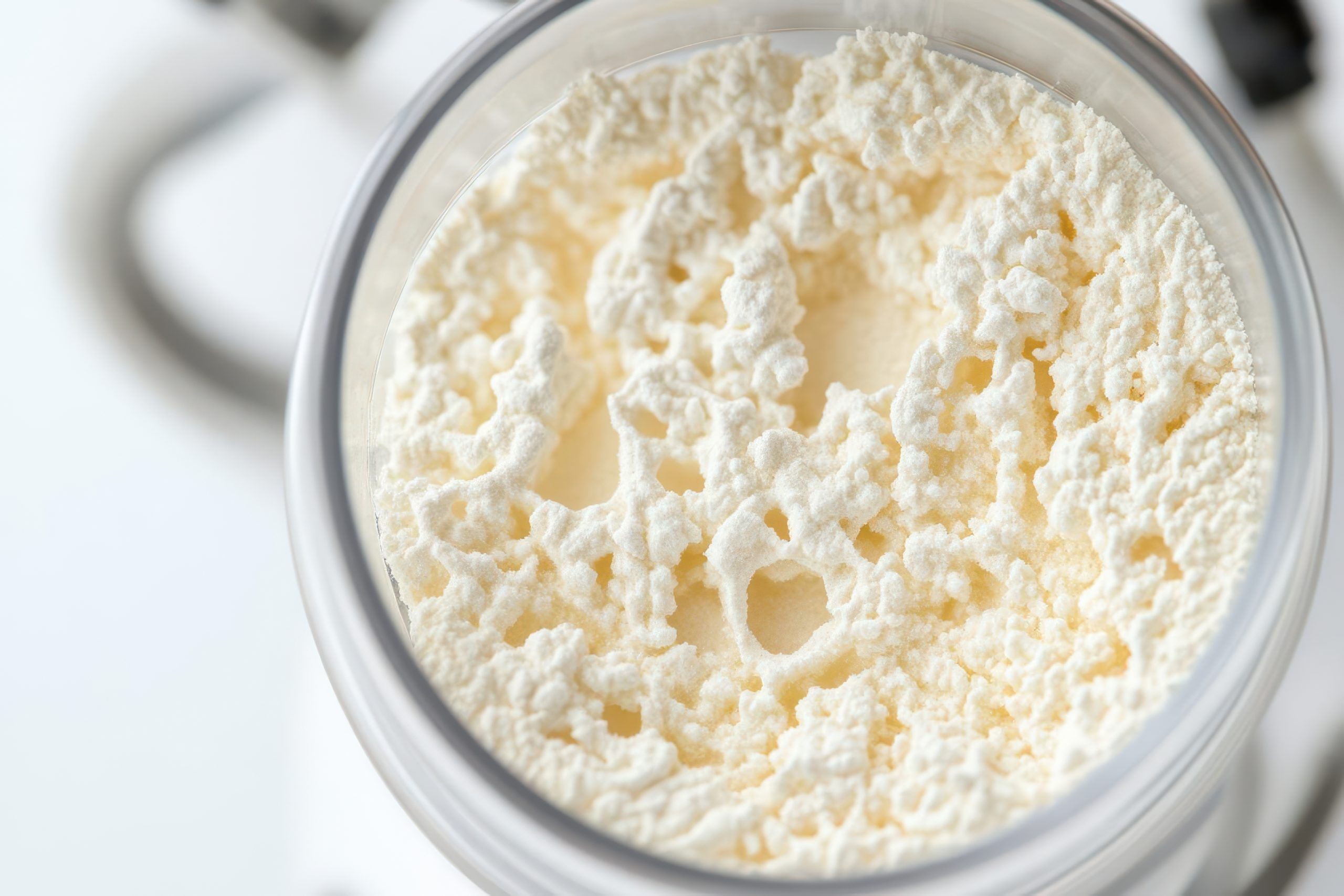
These are used in products where sugar has been replaced with an artificial sweetener and the product has lost bulk and to add bulk to artificial sweetener products so they can be used in normal amounts at the table. Sometimes foods are bulked with an ingredient such as maltodextrin and sometimes with an additive.
Polydextrose (E1200)
Polydextrose (E1200) is formed from glucose, sorbitol and acid to make a weakly acidic water soluble polymer that contains minor amounts of bound sorbitol and acid. It is used as a low-calorie bulking agent that is used as a partial replacement for sugars and/or fats whilst maintaining texture and mouthfeel. It is also a useful stabiliser preventing sugar and polyol crystallisation and can act as a humectant in hard sweets as well as retar the loss of moisture in baked goods. It does not have a sweet taste so can be used for both sweet and savoury products and is only partially digested by bacteria in the large intestine so has a calorie value of 1kcal/g compared to 3.75kcal/g for sugars. As it does not require insulin for metabolism it can be used in foods marketed for diabetics. It is also not fermented by mouth bacteria so will not contribute to dental caries. Polydextrose is permitted in the EU quantum satis.
Other additives used for bulking
A number of additives can be used for bulking but have other specific purposes so information about them can be found in other sections.
Polyols (sugar alcohols) are sweeteners (e.g. E420, E421, E967, E968)
The polyols such as sorbitol, maltitol, erythritol, and xylitol can provide bulk and sweetness in sugar-free or reduced-calorie products.
Guar Gum (E412) is a thickener
And can be used as a soluble fibre that adds bulk and viscosity to foods like cheese and ice cream.
Sodium Alginate (E401) is a thickener
This can also be used as a bulking agent commonly used in jellies and other food products.
Xanthan Gum (E415) is a thickener
This can also be used as a bulking agent often used in baked goods, sauces, and other food products.