Thickeners, Stabilisers and Gelling agents
Many additives in this group can be used across these functions.
Thickeners provide ‘body’ to food and there are many ways of doing this using gums and starches. Gum use is limited by their potential gummy texture and so often more than one type of gum is used.
Stabilisers are used in foods to keep emulsions stable for an extended time, but can also stabilise colours in food or act as binders in reconstituted food. Many of the substances used as stabilisers have other functions in food as well often as thickeners or emulsifiers.
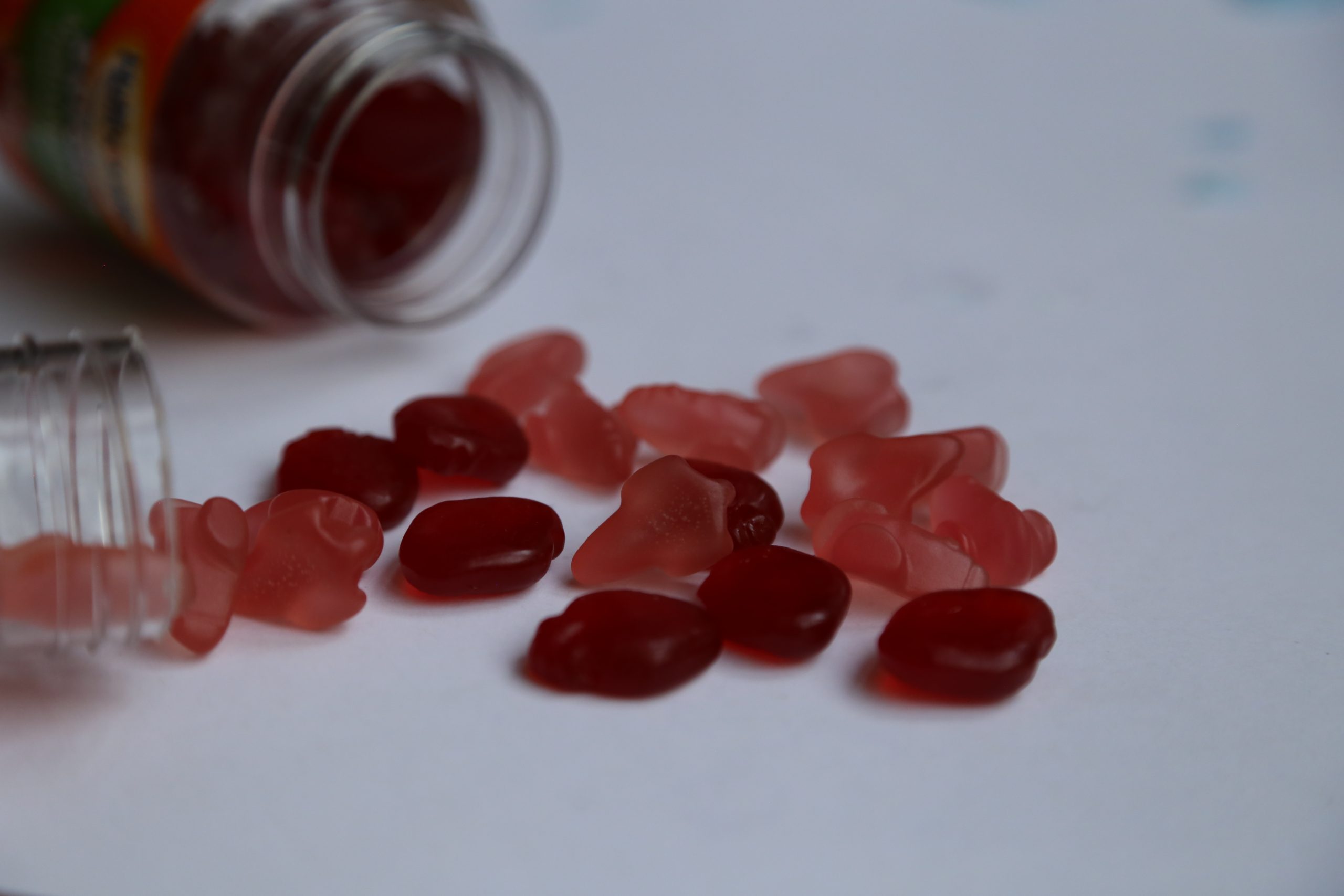
Gelling agents give a food texture by forming a gel. Gums are also typically used as gelling agents. A number of gelling agents are specifically not permitted in jelly-mini cups in the EU and UK under EU Commission Decision 2004/374/EC.
This suspended the placing on the market and import of jelly mini-cups containing the food additives E400 (alginic acid), E401 (sodium alginate), E402 (potassium alginate), E403 (ammonium alginate), E404 (calcium alginate), E405 (propane 1,2-diol alginate), E406 (agar), E407 (carrageenan), E407a (processed euchema seaweed), E410 (locust bean gum), E412 (guar gum), E413 (tragacanth), E414: (acacia gum), E415 (xanthan gum), E417 (tara gum) and E418 (gellan gum).
Alginic acid (E400)
Alginic acid (E400) is extracted from brown seaweed and swells in water but does not dissolve. The commercial product is extracted from a wide range of brown seaweed species from the North Atlantic, California, Mexico and South America. Most is extracted from material growing naturally but there is some seaweed cultivation in China. Alginic acid swells in water but does not dissolve and its main application is in pharmaceutical tablets. It is used in antacid tablets but rarely added to food, occasionally used in ice-cream and whipped cream as a stabiliser. It is not absorbed by humans and has quantum satis status.
Alginates: Sodium alginate (E401), Potassium alginate (E402), Ammonium alginate (E403), Calcium alginate (E404)
Alginates: Sodium alginate (E401), Potassium alginate (E402), Ammonium alginate (E403), Calcium alginate (E404) are the principal structure components of brown seaweeds and are present as a mixed salt of sodium, potassium, calcium and magnesium. The sodium, potassium and ammonium salts are cold-water soluble and are used interchangeably but the calcium salt is insoluble. They are all used for thickening, gelling, stabilising, film forming and for controlled release applications. The alginates form viscous solutions in hot and cold water and form gels by a controlled reaction with calcium, but free calcium content of dairy products prevents them from dissolving in cold milk (although sequestering agents can be used or the milk heated to allow them to dissolve). Alginates are very efficient water binders which make them good thickeners and they can precent water loss in solid foods. Their ability to make gels without the need for heat differentiates them from other agents such as carrageenan, gelatine, agar and locust bean gum. This makes them useful if flavours are heat sensitive or in instant mousses and cheesecakes. Alginates are not absorbed by the human body so are low-calorie ingredients. However care needs to be taken when using these as they can clump if mixing is not done carefully. They are typically used in sauces, salad dressings, desserts, fruit preparations, ice cream and sorbets, low-fat spreads, bakery filling creams and onion rings. Ammonium alginate is often used in icings and frostings.
PGA (propylene glycol alginate) (E405)
PGA (propylene glycol alginate) (E405) is also known as Propane-1,2-diol alginate and is a thickener, suspending agent and stabiliser that forms viscous solutions in hot and cold water and which is a very efficient water binder. It can be used in much the same way as the soluble alginates but is more compatible with acidic foods (with a pH as low as 3) and foods that are high in calcium. It is sued in salad dressings, meringues, ice cream, noodles, dairy desserts and beer. In the EU it is allowed in a range of foods with individual maximum levels.
Agar (E406)
Agar (E406) is obtained from red seaweeds collected on the coats of Japan, Korea, Chile, Spain, Portugal, Morocco and Indonesia. The agar is extracted using hot diluted alkali and cooled to form a brittle gel. Agar is used to gel fermented foods dairy products in Europe but by far the largest volume of agar is used in Asia for traditional dishes of Tokoroten noodles, mitsumame and red bean jelly. Sometimes agar is mixed with locust bean gum to make a more elastic texture. In the EU it has quantum satis status.
Carrageenans (E407)
Carrageenans (E407) are also extracted from a red seaweed which is farmed on the coats of the Philippines, Indonesia and East Africa. Carrageenans are used as gelling agents, thickening agents and stabilisers and are use to form gels, thicken milk drinks and is often used with locust bean gum to make jellies. The water-gelling properties are used in cooked meat products to bind water. Carrageenan has quantum satis status.
PES (processed euchema seaweed) (E407a)
PES (processed euchema seaweed) (E407a) is also extracted from red seaweed and is a gelling agent and water biding agent often used in hams and cold eating cooked poultry products as well as to stabilise ice-cream, thicken milk drinks and stabilise cocoa powder in chocolate milk. It is cheaper to produce than carrageenan so can be substituted for use.
It has quantum satis status in the EU.
Locust bean gum (E410)
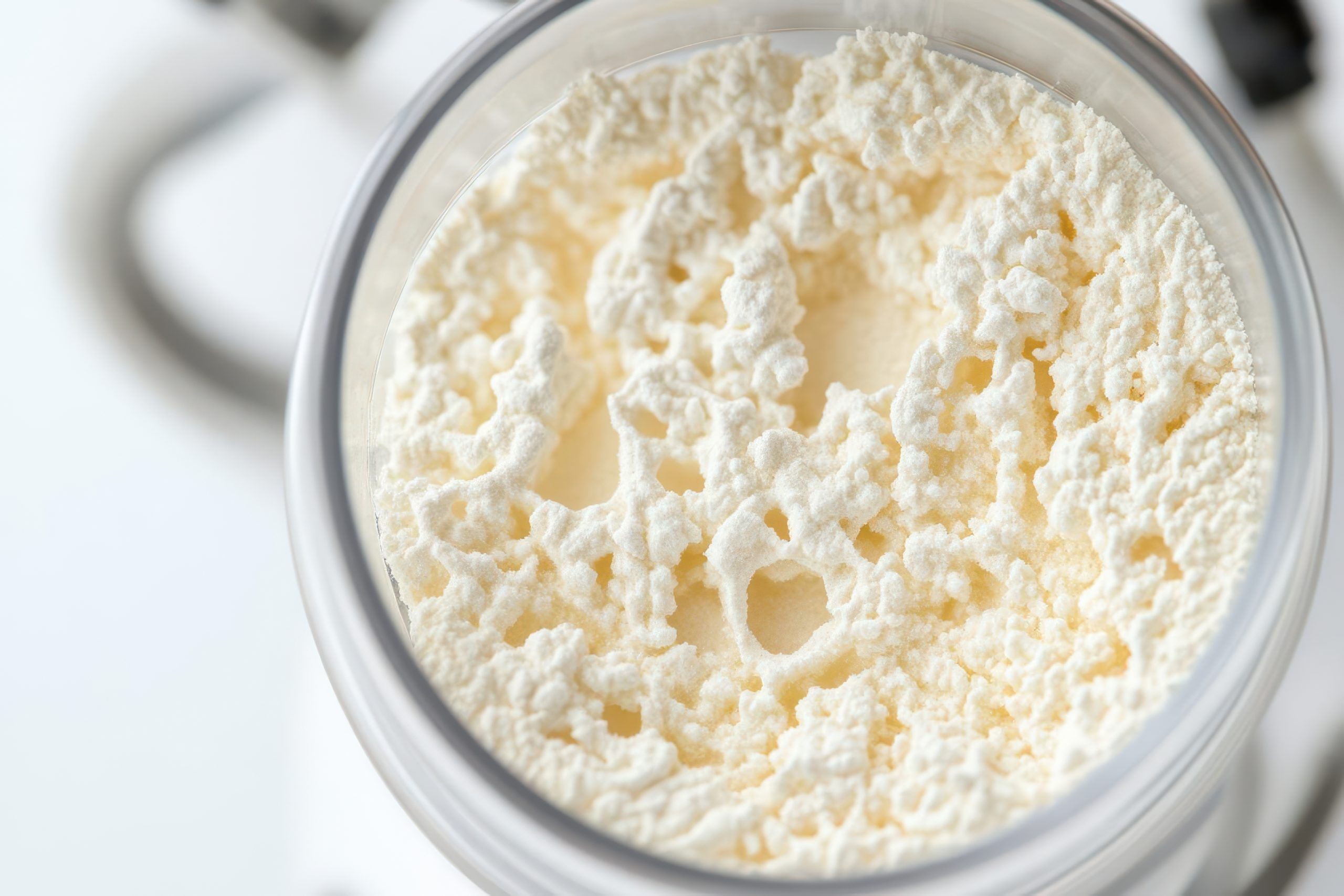
Locust bean gum (E410) also known as LBG is the ground endosperm of the seed of the locust bean (also called carob) tree which grows wild in countries bordering the Mediterranean with Spain, Morocco and Greece being major producers. The white powder created is a high weight polysaccharide which is an efficient thickener and gelling agent. The powder partially hydrates in cold water, but the full viscosity can be obtained only when heated to at least 85oC. LBG interacts with carrageenan to increase strength and elasticity of gels. LBG is widely used with xanthan gum to prepare elastic gels and works well with guar gum and is typically used in ice cream, sauces, soups, ketchups, dressings, desserts and mousses. It is non-digestible so can be classified as a soluble fibre, and it is known to increase the intestinal tract motility and reduce blood serum cholesterol.
LBG has quantum satis status but because it readily absorbs water and swells it should not be ingested as a dry powder and is not allowed in dehydrated foods.
Some reports have suggested that the protein in LBG can act as an allergen and people with allergies to other legumes like peanuts or beans may be more prone to LBG allergy.
Guar gum (E412)
Guar gum (E412) is the ground endosperm of the seeds of the guar plant which is cultivated in the arid regions of north-west India and Pakistan. The powder is a long chain sugar and can be steam treated to remove the beany flavour. Additional enzymatic treatment can form a gum which mimics locust bean gum. Guar gum is an effective thickening agent which dissolves almost completely in cold water and guar can cause phase separation which has been used in the formulation of fat reduced or fatless spreads. Guar has an advantage over starch in that it is more resistant to the stress applied when foods are cut and it works well with locust bean gum and xanthan gum. It is non-digestible so can be classified as a soluble fibre and in appropriate doses it can also increase gut motility and reduce serum blood cholesterol. Guar gum is typically used in ice cream, drinks, ketchups and mayonnaises, cold prepared deep frozen foods and as flour additive in the bakery industry. It has quantum satis status in the EU. It should not be ingested as a dry powder as it absorbs water and swells and is not permitted in dehydrated foods. Isolated reports have suggested that the protein in guar gum may act as an allergen but this is likely to be no different to other protein containing foods. There have however been incidents of contamination of guar gum imported into the EU from India with pentachlorophenol and dioxins and imports from India are controlled by Commission Implementing Regulation 2015/175.
Tragacanth (E413)
Tragacanth (E413) is a natural gum from wounds of shrubs of the species Astragalus which grow in arid areas of Iran and Turkey. Incisions are made in the lower stems and roots of the shrub and the gum is extruded as thin white ribbons or larger off-white flakes. These are dried and milled to a fine powder. Tragacanth is used as a cold-soluble thickener, stabiliser and suspending agent and an emulsifier. It is typically used in sugarcraft, confectionery, icing, pourable and spoonable dressings and flavoured oil emulsions. It has a creamy mouthfeel with a natural flavour. Tragacanth is reasonably expensive and its use often replaced by xanthan gum. It has quantum satis status in the EU.
Gum arabic (E414)
Gum arabic (E414) also known as acacia gum is a gummy exudate produced by Acacia trees as a response to wounding. There are some orchards mainly in Sudan but the majority of trees are not cultivated. Gum arabic is a polysaccharide and is used as viscosity modifier and emulsion stabiliser. It is very soluble in water, practically colourless, odourless and tasteless and imparts mouthfeel with gumminess. It is effective in keeping oils in suspension without increasing viscosity for encapsulating flavouring oils both for soft drinks and for spray drying to produce flavoured powders. Gum arabic is a source of soluble fibre but being a natural product supply is liable to considerable fluctuation and so its use has been mainly replaced by modified starches. It has quantum satis status in the EU
Xanthan gum (E415)
Xanthan gum (E415) is a polysaccharide produced by the fermentation of sugars by the bacterium Xanthamonas campetris which was originally isolated from cabbage leaves. Xantham gum is used to increase viscosity in sauces and dressings, drinks and cakes. It is particularly stable to acid, heat and enzymes so supports long shelf-life. Xanthan gums can be used to hold particles in suspension so increases body of a product and can be used in drinks to improve mouthfeel, to stop liquids dripping from bottles and in baking where it can increase volume and this is particularly the case in gluten-free bakery products where it improves texture and shelf-life of products. In the EU it can be used quantum satis but not in jelly cups. It should never be consumed as a powder as it swells rapidly and cannot be used in dehydrated foods. As it hydrates quickly it needs to be well distributed in a food before water is added or it can clump.
Karaya gum (E416)
Karaya gum (E416) is a natural exudate collected from the tress of Sterculia urens and other species of Sterculia and Cochlospermum which grow in India, Senegal and Mali. Incisions are made in the tree and the gum is an exudate which is dried and milled. It is used as a thickener and coating and glazing agent and is useful as a thickener as it does not have a gummy texture, has good acid stability and is resistant to hydrolysis so it can’t be digested (and has been used as a laxative). It is permitted for use in the EU in a number of foods such as sauces, bakery coatings, filling and toppings as well as chewing gum with individual maxima given.
Tara gum (E417)
Tara gum (E417) is the ground endosperm from the seed of the tara shrub Caesalpina spinosa which is indigenous to Peru. The main component is a high molecular weight polysaccharide and it acts as an efficient thickening and gelling agent. It partially dissolves in cold water and can be mixed with xanthan gum and carrageenan to make gels of varying stability and elasticity. It is permitted in the EU quantum satis but cannot be used in jelly cups and is not permitted for dehydrated foods as it readily absorbs water and swells.
Gellan gum (E418)
Gellan gum (E418) is a polysaccharide prepared by fermentation of the microorganism Spingomonas elodea and used for gelling, stabilising or film forming. Two forms of the gum are produced and they are hot water soluble It is effective at very low concentrations and does not mask flavour in foods and the two forms of the gum can be used in combination to produce a wide range of textures. They must be added carefully to water to avoid clumping and are not suitable for use in hot, acidic environments. It can be used quantum satis in the EU but not used in jelly cups.
Konjac gum (E425)
Konjac gum (E425) is also known as konjac glucomannan, konjac flour, yam flour, konnyaku glucomannan and glucomannan gum. It is extracted from the tubers of the perennial plat Amorphophallus konjac. Tubers are harvested when the plant is 2-3 years old, dried and ground and has been used in foods for over 1000 year in Asia where konnyaku noodles are a traditional food. It can be used with carrageenan to forma firm cohesive gel and is used in sausage and meat analogues as a texture modifier and water binder. Konjac gum also acts as a binder and protects against freezer damage in surimi seafood sticks. It can also be used in cream cheese and processed cheese as a moisture binder providing good spreading properties and for giving a creamy mouthfeel. Konjac can be used alongside other gums such as xanthan gum, carrageenan and locust bean gum and in the EU its use must be limited to 10g/kg of food and it cannot be used in jelly cups or jelly confectionery.
Soya bean hemicellulose (E426)
Soya bean hemicellulose (E426) is formed from hot water extraction of soya bean fibres, a by-product of soya oil and soya protein production. Soyabean hemicellulose is soluble in hot and cold water and has good water binding capacity. It is used as a thickener in baked goods intended for freezing and warming by microwave and in jelly confectionery. It is also used as a stabiliser in yoghurt drinks, improves the texture of non-fried instant noodles and controls the stickiness of cooked rice and noodles. It is permitted in specific foods in the EU each with a specific maxima: prepacked processed potato products, jelly confectionery (but not jelly cups), prepacked ready to eat rice, frozen egg products, emulsified sauces and food supplements.
Cassia gum (E427)
Cassia gum (E427) is the ground purified endosperm of Cassia obtusifolia or Cassia tora which are bushy shrubs growing in the Indian sub-continent. The seeds of Cassia occidentalis are natural contaminants and must be reduced before the product is ground. The gum is a polysaccharide which is used as a thickener and gelling agent which gains full viscosity in hot water. It forms firm gels with carrageenan and agar and has been permitted for human use since 2010 so has been used in a limited number of products such as dairy products and heat-treated meat products. It is permitted for use in the EU in flavoured milks, edible ices, fillings, toppings and coatings for fine bakery products and desserts, heat treated processed meats. Dehydrated soup and broths, sauces and dairy based desserts each with individual limits.
Pectins (E440)
Pectins (E440) include pectin and amidated pectin. Pectins are found in most land plants especially in fruits commercially are extracted from fruit solids remaining after juice extraction and can also be extracted from sugar beet pulp and sunflower heads. Pectins are used as gelling agents and thickeners in mainly acidic foods, most commonly jams and jellies and fruit fillings, but is also used in glazing and sauces. Some pectins are used to thicken dairy and soya yoghurts, to improve mouthfeel in drinks or to thicken water and milk-based desserts. Pectin is also used to supplement the pectin naturally in fruit in jam making in the home. Pectins are a form of soluble fibre and may also be used to increase the fibre content of foods and drinks. They are permitted quantum satis in the EU.
Methyl cellulose (E461)
Methyl cellulose (E461) is manufactured from purified cellulose by reaction with methyl chloride and it is soluble in cold water where it has thickening properties, but insoluble in got water where gels are formed. This allows binding of food products when heated. It is used in sauces and filling and its gel forming capacity means it can bind and improve shape ion products such as reformed meat, reformed vegetables, potato products, vegetable burgers and breads for special dietary uses. It is permitted in the EU quantum satis.
Hydroxypropyl methyl cellulose (E464)
Hydroxypropyl methyl cellulose (E464) also known as Hydromellose is produced from purified cellulose by treatment with methyl cellulose and propylene oxide. It is soluble in cold water as a thickener but insoluble in hot water forming gels. It is typically used in soya burgers, sausages, onion rings, formed potato products and gluten free bakery products and is permitted quantum satis in the EU.
Methyl ethyl cellulose (E465)
Methyl ethyl cellulose (E465) also known as Ethyl methyl cellulose is produced from cellulose with alkali, dimethyl sulphate and ethyl chloride. It has surface activity and can stabilise foams in the presence of fat. Solutions of methyl ethyl cellulose can be whipped to make a foam which is tolerant to fat and this can stabilise eggs white. It is permitted in the EU quantum satis.
Sodium carboxy methyl cellulose (E466)
Sodium carboxy methyl cellulose (E466) also known as cellulose gum is manufactured from purified cellulose by reaction with monochloracetic acid. It is soluble in hot and cold water and is used as a thickener and stabiliser in frozen products. It has quantum satis status in the EU and is used in soft drinks, drink powders and concentrates, ice creams, sorbets and bakery products.
Crosslinked sodium carboxy methyl cellulose (E468)
Crosslinked sodium carboxy methyl cellulose (E468) is also known as crosslinked cellulose gum and croscarmellose. It is made from cellulose from wood pulp or cotton fibres reacted in sodium hydroxide with sodium monochloroacetate. This produces a substance that is a gum that swells in water without dissolving and which is used as a disintegrating agent to accelerate the break up of tablets in water. It is permitted for use only in tablets or capsules of table top sweeteners and supplements in specified limits in the EU.
Enzymatically hydrolysed carboxy methyl cellulose (E469)
Enzymatically hydrolysed carboxy methyl cellulose (E469) is also known as crosslinked carboxy methyl cellulose, crosslinked cellulose gum and croscarmellose. It is produced from wood pulp or cotton fibres reacted in sodium hydroxide with sodium monochmoroacetate which makes a crosslinked gum when heated under acid conditions. It swells in water without dissolving and is used as a disintegrating agent to accelerate the break up of water in tablets. It is only permitted for use in the EU in tablets or capsules of table top sweeteners and food supplements to specific limits.
Thermally oxidised soya-bean oil interacted with mono-and diglycerides of fatty acids (E479b)
Thermally oxidised soya-bean oil interacted with mono-and diglycerides of fatty acids (E479b) is made by heating soya bean oil in the presence of air and then reacting with the mono- and diglycerides of fatty acids (E471). This mixture is used to stabilise fat emulsions used for frying on a hot plate or griddle. In the EU it is only permitted for use in fat emulsions for frying purposes.
Polyvinylpyrrolidine (E1201), Polyvinypolypyrrolidine (E1202)
Polyvinylpyrrolidine (E1201), Polyvinypolypyrrolidine (E1202) are used as additives to help tablets break up in water and are only permitted in table top sweeteners and food supplements in tablets or coated tablets quantum satis in the EU.
Polyvinyl alcohol (E1203)
Polyvinyl alcohol (E1203) is used as a film coating agent in food supplements and is only permitted for this use in the EU.
Aceylated distarch phosphate (E1414)
Aceylated distarch phosphate (E1414) is used as a thickener and stabiliser to provide a texture in foods that can be retained even when the food is chilled or frozen. This additive provides stability at a range of temperatures and increases shelf life. They are typically used in soups, sauces, fruit fillings, chilled and frozen recipe dishes. They are permitted quantum satis except in foods for young children where they are permitted to a maximum of 50mg/kg.
Aceylated distarch adipate (E1422)
Aceylated distarch adipate (E1422) are used as thickeners and stabilisers in processed foods where they provide viscosity and tolerance to heat and acid and low temperature storage. These starches can cause curdling in dairy products but are typically used in gravies, soups, sauces, sweet and savoury fillings. They are permitted quantum satis except in foods for young children where they are permitted to a maximum of 50mg/kg.
Acetylated oxidised starch (E1451)
Acetylated oxidised starch (E1451) is made by reacting starch with oxidising agents such as hypochlorite and then acetylating agents such as acetic anyhydride. These modifed starches are used as binding and gelling agents and as alternatives to gelatine and gum Arabic in soft sugar confectionery products. It is permitted quantum satis in the EU.