Anticaking agents
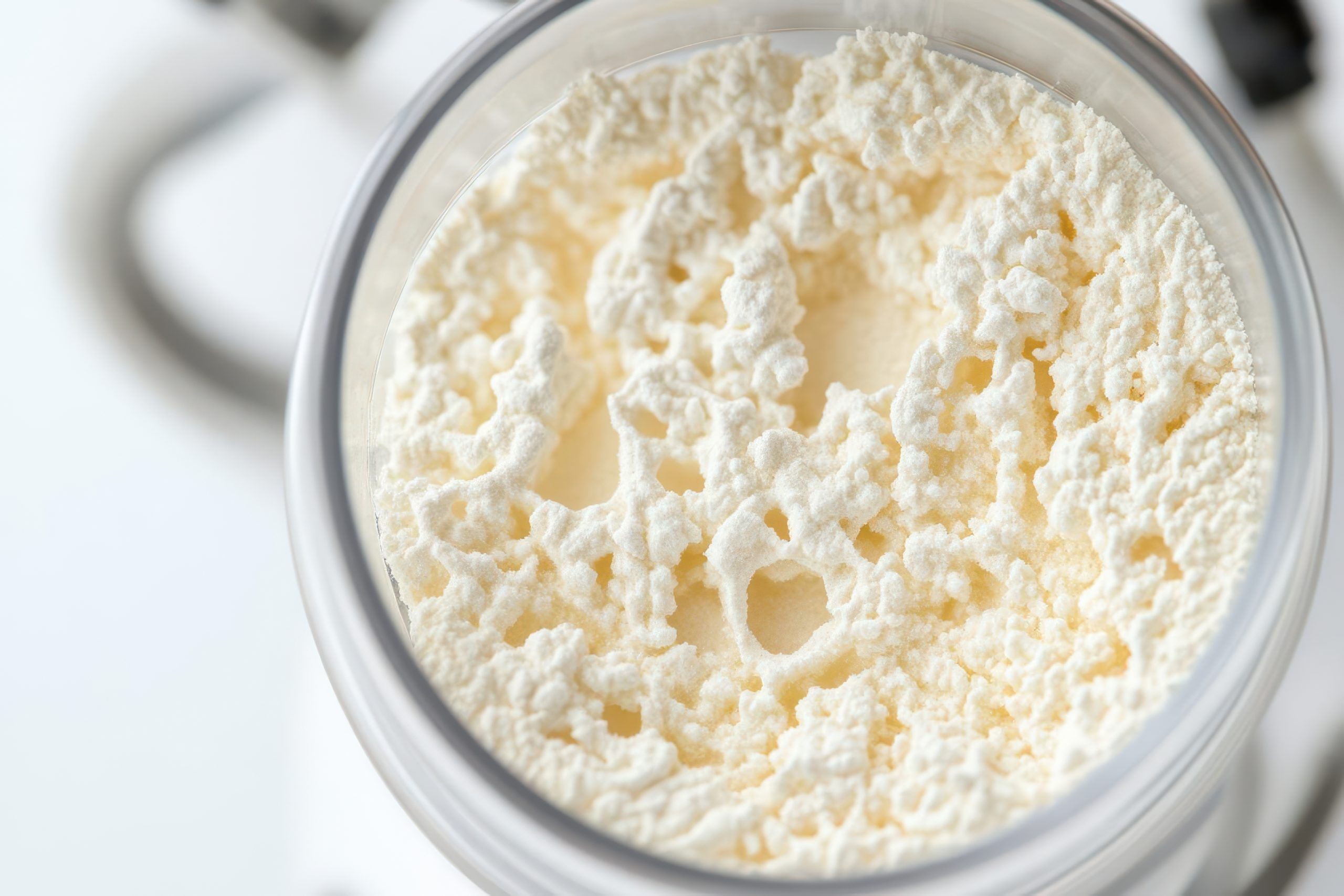
Anti-caking agents help powders to be free flowing and allows them to mix and dissolve. Sometimes powders can absorb water and form a solid mass. These problems can be solved by using a fine powder which coats the surface of the powder particles and stops them ‘caking’ and acts as a lubricant so the powder still flows.
Calcium carbonate (E170)
Calcium carbonate (E170) is a naturally occurring mineral found in chalk and limestone and food grade calcium carbonate is taken from sources which are at least 99% pure calcium carbonate. It can be used as a white colour and source of carbon dioxide in raising agents but is typically used as an anti-caking agent and as a source of calcium. It has quantum satis status in the EU.
Microcrystalline cellulose (E460)
Microcrystalline cellulose (E460) is also known as powdered cellulose and are derived from alpha-cellulose, the most abundant natural sugar found in plants and trees. It is manufactured by bleaching and washing alpha-cellulose before drying and grinding, or using other processed to provide a microcrystalline structure. These insoluble particles bind water and reduce stickiness and improve the flow and extrusion properties of puffed snacks, baked goods, instant foods, diet foods and many others. It is also used as a carrier for flavours, a source of insoluble fibre for diet products and meal replacers and an efficient emulsion and foam stabiliser.
Sodium potassium and calcium salts of fatty acids (E470a) and Magnesium salts of fatty acids (E470b)
Sodium potassium and calcium salts of fatty acids (E470a) and Magnesium salts of fatty acids (E470b) are the salts of the fatty acids made by reacting the acids with the appropriate hydroxide. The acids used are primarily stearic, palmitic and oleic. These salts have a number of uses as free-flow agents, anticaking agents and defoaming agents. In the EU they are permitted quantum satis.
Sodium ferrocyanide (E535), potassium ferrocyanide (E536) and calcium ferrocyanide (E538)
Sodium ferrocyanide (E535), potassium ferrocyanide (E536) and calcium ferrocyanide (E538) are manufactured from reacting the respective metal cyanide with ferrous sulphate. These ferrocyanides are used as anti-caking agent in table salt, the only food they are permitted in in the EU to a maximum level of 20g/kg and with an ADI of 0-0.03mg/kg body weight.
Iron tartrate (E534)
Iron tartrate (E534) is the name given to a complex of ferric chloride with sodium tartrate. It is a free-flow agent in table salt and salt substitutes and is only permitted in food in the EU for these purposes.
Silicon dioxide (E551)
Silicon dioxide (E551) is found in nature as sand but products used in the food industry are synthetically produced silica. Food grade silicon dioxide is an extremely fine powder with a very high ratio of surface area to weight and is used both during manufacture to increase powder flow and in powders for drinks and desserts. In the EU calcium silicate is controlled with silicon dioxide and other silicates where they are limited to use in a range of products with individual limits in each case but has quantum satis status as a carrier for emulsifiers and colours.
Calcium silicate (E552)
Calcium silicate (E552) is manufactured from inorganic raw materials and is used an anti-caking agent in sliced cheese and some powdered foods.
Magnesium silicate (E553a)
Magnesium silicate (E553a) is produced from inorganic raw materials and used as anti-caking agent in powders, controlled alongside silicon dioxide and other silicates.
Talc (E553b)
Talc (E553b) is used as a dusting powder and anti-caking agent and is permitted in a few products with individual limits and can be used as a carrier for colours.
Sodium aluminium silicate (E554) and Potassium aluminium silicate (E555)
Sodium aluminium silicate (E554) and Potassium aluminium silicate (E555) are prepared by precipitation of soluble salt of aluminium and the appropriate metal and are fine powders used as free-flow agents in food powders for drinks and desserts. Sodium aluminium silicate is most commonly used and these are inexpensive and effective for improving powder flow and processing. The potassium aluminium silicate is used when reduced sodium is required. In the EU along with other silicates and silicon dioxide they are allowed in a range of products with individual limits in each case. Potassium aluminium silicate is also permitted as a carrier for the colours titanium dioxide (E171) and iron oxides and hydroxides (E172).
Starch aluminium octenyl succinate (E1452)
Starch aluminium octenyl succinate (E1452) is used as an anti-caking agent only in food supplements (as defined in EU 2002/46/EC) and vitamin preparations